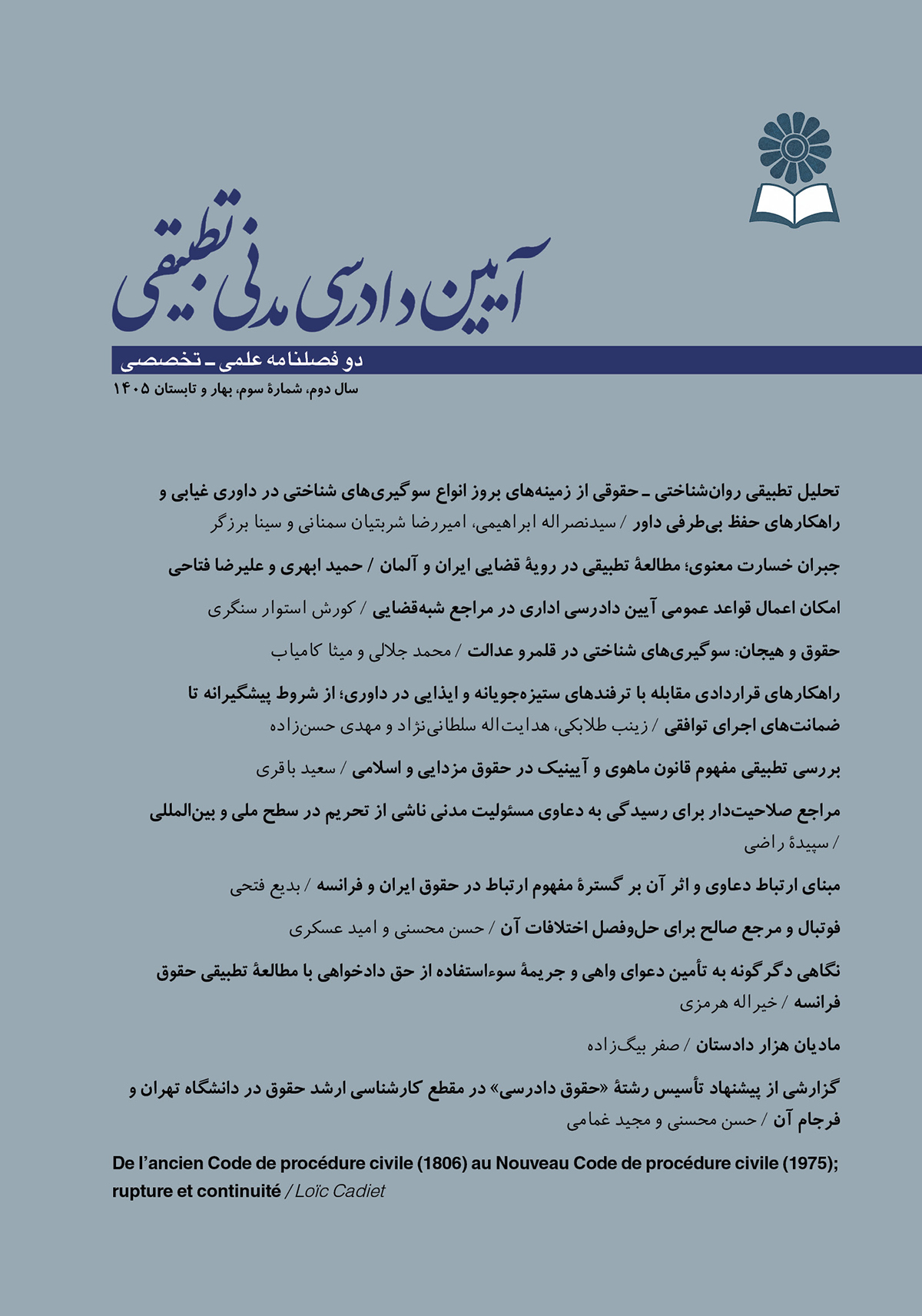
به آیینی و به سامانی: درستی - سازش - شادی

تئوری «عناصر سازندۀ حق» و نقد برچسب‌گرایی در قضاوت «خوانش انتقادی از رویۀ شعبۀ سوم دیوان عالی کشور در پرتو آراء فرجامی شمارۀ ۹۵۰۹۹۷۰۹۰۹۱۰۰۱۷۸ و شمارۀ ۹۶۰۹۹۷۰۹۰۹۱۰۰۲۵۷ »

نوع مقاله : مقاله پژوهشی

نویسنده

دانشیار گروه حقوق خصوصی و اسلامی دانشکدۀ حقوق و علوم سیاسی دانشگاه تهران

چکیده
در خصوص معیار شناسایی حق در دعاوی سرقفلی و حق کسب و پیشه، در رویۀ قضایی نظرات متفاوتی ابراز شده است. برخی اعتبار حق را از عنوان مندرج در قرارداد یا دادخواست استنباط می‌کنند و برخی آن را منوط به احراز سبب واقعی رابطه می‌دانند. نظری که در این نوشتار، بر پایۀ خوانش انتقادی دو رأی فرجامی شعبۀ سوم دیوان عالی کشور، از آن دفاع می‌شود، بر تفکیک میان سبب قراردادی سرقفلی، مقرر در مواد ۱۹۰ و ۱۹۱ قانون مدنی، و سبب قانونی حق کسب و پیشه، مقرر در قانون ۱۳۵۶، استوار است. بر پایۀ همین تفکیک نشان داده می‌شود که شعبۀ سوم، با جدا کردن این قانون از قانون ۱۳۷۶، پرداخت وجه را فی‌نفسه مولد حق نمی‌شمارد و اثر آن را تابع نقشی می‌داند که در ساختار رابطه ایفا می‌کند. عنصر زمان در تکوین حق کسب و پیشه، استقلال عقد صلح از اجاره، و مرز نظارت فرجامی موضوع مواد ۳۶۶ و ۳۷۰ قانون آیین دادرسی مدنی، همین رویکرد را تأیید می‌کنند. هزینه‌های رویکرد از حیث امنیت معاملاتی و تشتت رویه نیز بررسی و نشان داده می‌شود که این هزینه‌ها معیار سبب را بی‌اعتبار نمی‌کنند و ضرورت تدقیق آن را در آرای وحدت رویه نشان می‌دهند.

کلیدواژه‌ها

موضوعات

عنوان مقاله English

The Theory of the Constituent Elements of Legal Rights and a Critique of Label-Based Adjudication: A Critical Reading of the Jurisprudence of the Third Chamber of the Supreme Court in Light of Cassation Decisions

نویسنده English

Jafar Nory Yoshanloey
Associate Professor of Private Law Faculty of Law and Political Sciences University of Tehran
چکیده English

On the standard for recognizing rights in disputes over key-money and business goodwill, Iranian judicial practice has divided. Some rulings infer the right from the label in the contract or claim, others from the actual cause of the relationship. The view defended here, on the basis of a critical reading of two cassation rulings of the Third Chamber of Iran's Supreme Court, rests on distinguishing a contractual cause for sarqofli, provided in Articles 190 and 191 of the Civil Code, from a statutory cause for business goodwill, provided in the 1977 Tenancy Act. On this basis, the Third Chamber, by separating that Act from its 1997 successor, is shown to refuse treating payment as inherently rights-generating, tying its effect instead to the function it serves within the relationship. The temporal element in business goodwill, the independence of the settlement contract (solh) from the lease, and the boundary of cassation review under Articles 366 and 370 of the Code of Civil Procedure bear out this reading. The costs of the approach, in transactional security and divergent rulings, are examined and shown not to invalidate the cause standard but to point toward its refinement through unifying precedent.

کلیدواژه‌ها English

legal cause
sarqofli
business goodwill
solh
cassation review
دوره 2، ویژه نامه
ویژه نامه نکوداشت عالی جناب قاضی حسن غفارپور مراغی رئیس شعبه سوم دیوان عالی کشور، ایران
1405

  • تاریخ دریافت 30 شهریور 1405
  • تاریخ پذیرش 04 مهر 1405
  • تاریخ انتشار 01 آبان 1405