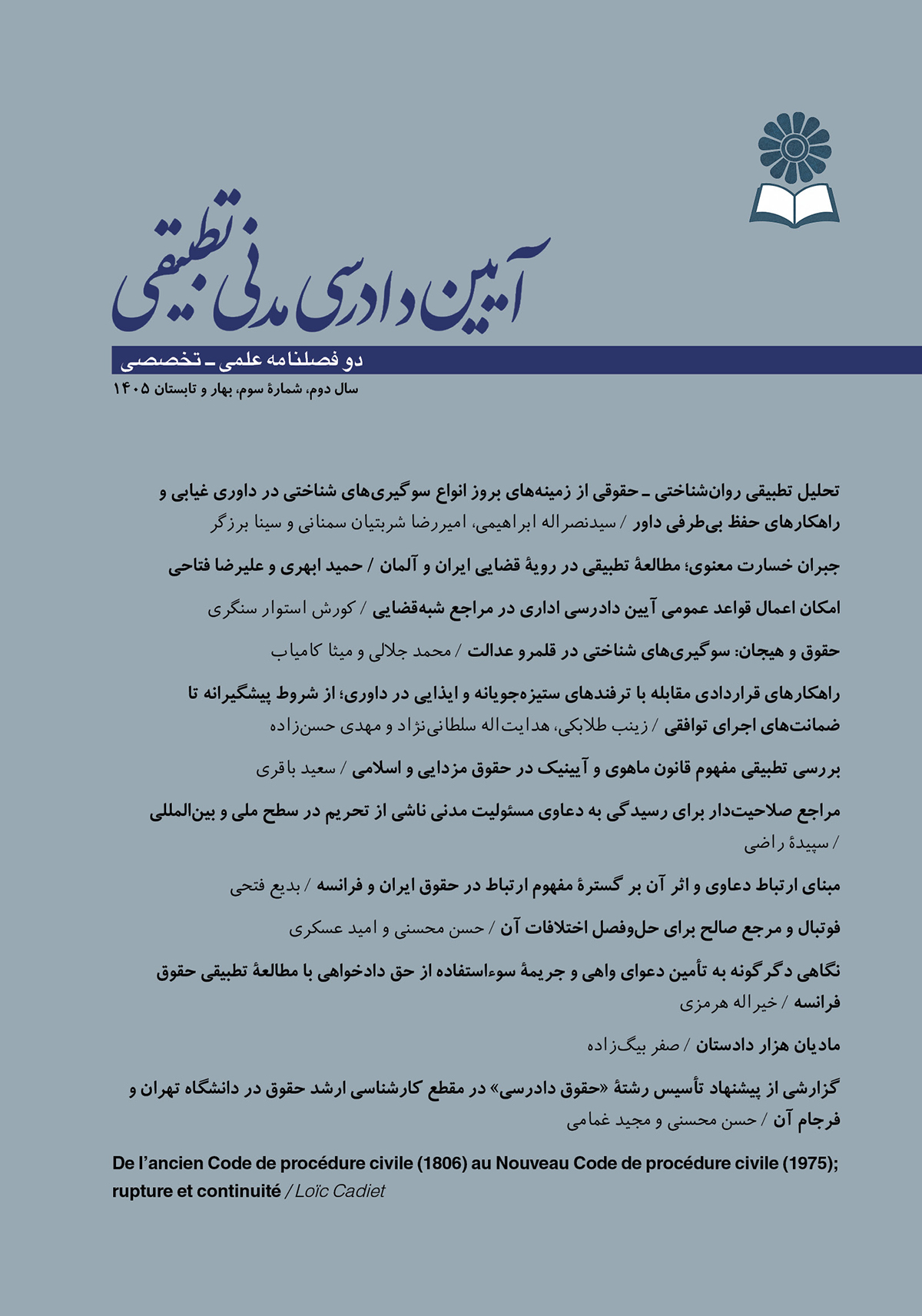
به آیینی و به سامانی: درستی - سازش - شادی

نظارت دیوان عالی کشور بر کشف واقع و رعایت اصول و قواعد دادرسی و حقوق اطراف دعوی (نقد و بررسی دادنامه شماره ۹۵۰۹۹۷۰۹۰۹۱۰۰۲۰۷ مورخ ۲۲/۴/۱۳۹۵ صادر از شعبه سوم دیوان عالی کشور)

نوع مقاله : توجیه و نقد رویه قضایی

نویسنده

دانشیار، گروه حقوق خصوصی و اقتصادی، دانشکده حقوق و علوم سیاسی، دانشگاه علامه طباطبایی، تهران، ایران.

چکیده
نظارت دیوان عالی کشور بر دادگاه‌های نخستین و تجدیدنظر، به ‌منظور رعایت اجرای صحیح قانون در دادگاه‌های تالی از اهمیت بسیار زیادی در دادرسی برخوردار است. شیوه معقول این نظارت نیز از طریق جایز بودن فرجام‌خواهی است. اما اجازه دادن به فرجام از همه آراء قطعی دادگاه‌های نخستین و تجدیدنظر موجب ازدحام کار دیوان عالی کشور خواهد شد، به ‌همین دلیل هم‌اکنون احکامی که از دادگاه‌های تجدیدنظر صادر می‌گردد، قابل فرجام‌خواهی نیست مگر احکام مذکور در بند الف ماده ۳۶۸ ق.آ.د.م. این امر دایره نظارت دیوان ‌عالی کشور بر دادگاه نخستین و تجدیدنظر را به ‌شدت کاهش داده است. در دادنامه مورد بررسی، اهمیت نظارت دیوان ‌عالی کشور بر دادگاه‌های نخستین و تجدیدنظر به ‌خوبی آشکار و مبرهن گردیده و معلوم شده‌است که اگر دیوان عالی کشور بر دادگاه نخستین و تجدیدنظر نظارت نکند، ممکن است چه آراء بی‌بنیان و خلاف قانونی از دادگاه نخستین و تجدیدنظر صادر گردد. در این پرونده دو مورد از موارد نقض مذکور در ماده ۳۷۱ ق.آ.د.م (بند ۳ بند ۵) به‌خوبی برای اعمال نظارت بر دادگاه‌های تالی مورد استناد قرار گرفته است.

کلیدواژه‌ها

موضوعات

عنوان مقاله English

The Supreme Court’s Supervision over the Discovery of the Truth, Compliance with Procedural Principles and Rules, and the Rights of the Parties to the Dispute (A Critical Analysis of Judgment No. 9509970909100207, Dated July 12, 2016, Issued by Branc

نویسنده English

Kheirollah Hormozi
Associate Professor, Department of Private and Economic Law, Faculty of Law and Political Science, University of Allameh Tabatabaie,Tehran, Iran.
چکیده English

The supervision exercised by the Supreme Court over courts of first instance and appellate courts is of paramount importance in judicial proceedings, ensuring the correct application of the law in lower courts. A rational method for this supervision is the mechanism of cassation appeals (*farjam-khahi*). However, permitting cassation appeals against all final judgments from courts of first instance and appellate courts would overwhelm the Supreme Court with a massive caseload; consequently, judgments issued by appellate courts are currently not subject to cassation appeal, except for those specified in Clause (a) of Article 368 of the Civil Procedure Code. This restriction has significantly narrowed the scope of the Supreme Court's supervisory authority over these courts. The judgment under review clearly demonstrates the importance of the Supreme Court's supervisory role, illustrating the potential for baseless or unlawful rulings to be issued by lower courts in the absence of such oversight. In this case, two grounds for overturning a judgment—as stipulated in Article 371 of the Civil Procedure Code (Clauses 3 and 5)—were effectively invoked to exercise supervision over the lower courts.

کلیدواژه‌ها English

the correct application of the law
overturning a judgment due to non-observance of procedural principles and rules
overturning a judgment due to deficiencies in the investigation
دوره 2، ویژه نامه
ویژه نامه نکوداشت قاضی حسن غفارپور (مراغی) رئیس شعبه سوم دیوان عالی کشور، ایران
1405

  • تاریخ دریافت 21 مهر 1405
  • تاریخ پذیرش 23 مهر 1405
  • تاریخ انتشار 01 آبان 1405